
In November 2016, three colleagues and I at IBM filed a patent application with a title that sounds almost quaint today: “Real-Time Analysis of a Musical Performance Using Analytics” (published as US 2018/0137425 A1 [1]).
The scenario we described was a rock concert. A guitarist plays an instrument with an embedded sensor, cameras read the audience’s faces and body language, fans fire likes and dislikes from their phones, and a system fuses all of it, in real time, into one judgment: is this performance going well? If not, it tells the performer, while there is still time to fix it. In one embodiment, an LED on the neck of the guitar lights up green when the part is played correctly, flashes yellow when the tempo starts to waver, and turns red on a wrong note.
We called the core of it an “artificially intelligent analytics engine,” because in 2016 that was the vocabulary we had.
Ten years later I design data architectures for agentic AI systems in production, and recently I re-read our patent with today’s eyes. The experience was uncanny. What we specified, component by component and step by step, is the anatomy of an AI agent: multimodal perception, context aggregation, inference grounded in episodic and semantic memory, an evaluation function, and actuation through a human in the loop, all under a hard real-time constraint. We did not have the language for it. We had the loop.
This article walks through that mapping honestly: what a 2016 decision-support spec got structurally right about agents, and, just as instructive, what it got wrong or could not see at all.
Contents
What we actually specified
Strip away the patent prose and the system has seven parts.
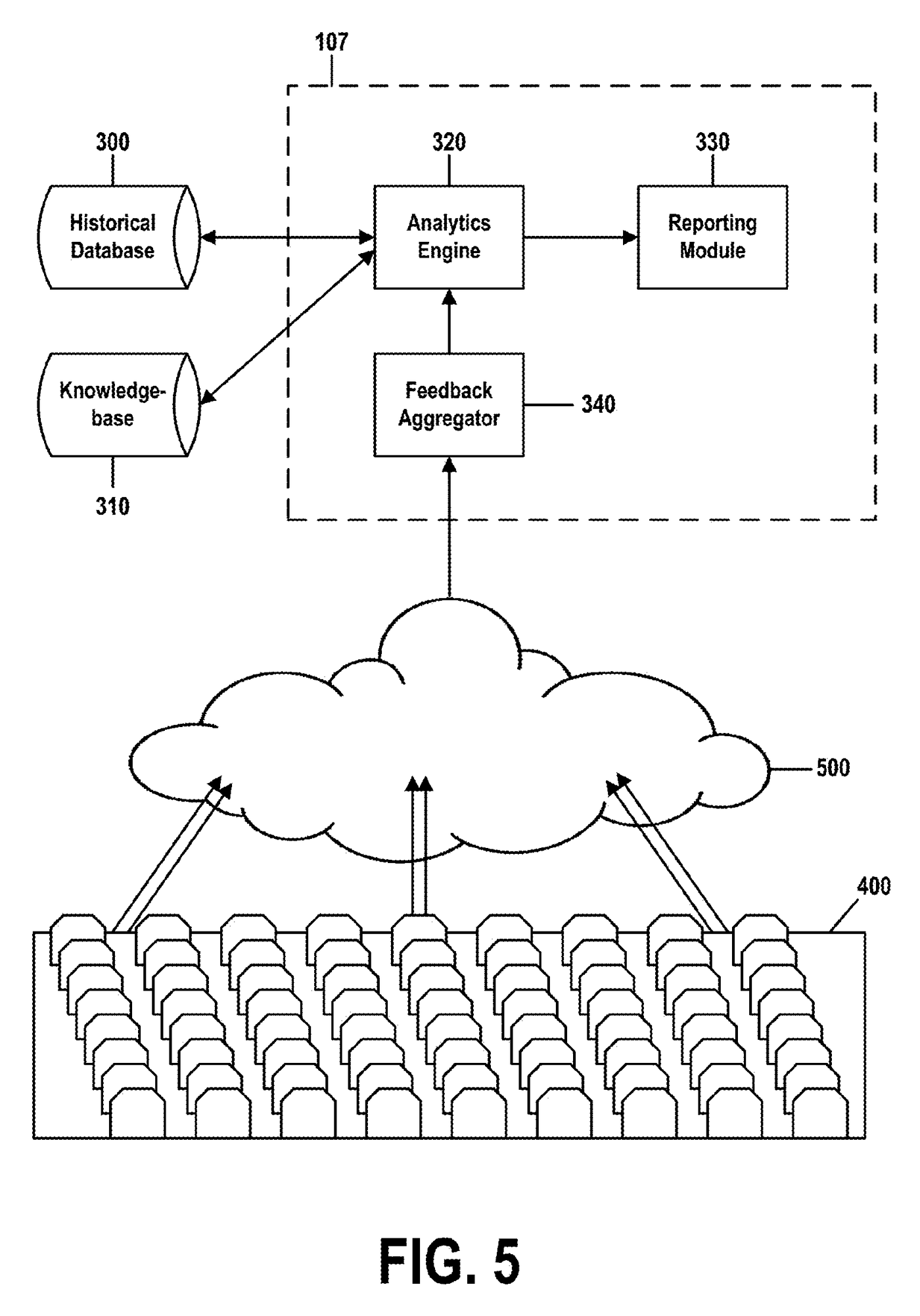
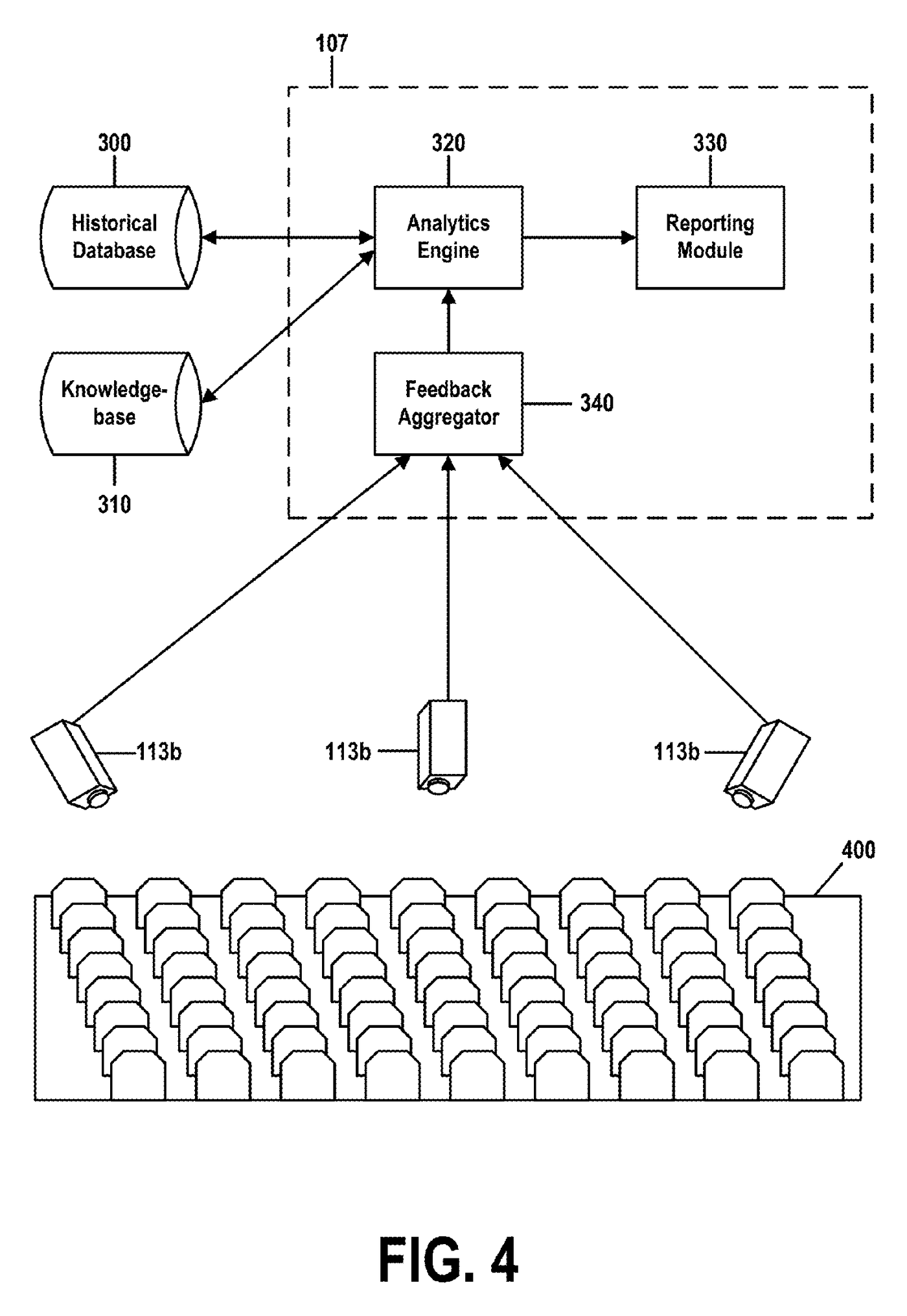
Perception, in three modalities. Sensors embedded in instruments and microphones report objective performance parameters: timing, pitch, intonation, volume (the spec calls them sensors 113a, and includes MIDI, tactile, vibrational, ultrasonic, pressure and infrared variants). Cameras capture the audience’s involuntary signals: facial expressions and body language, explicitly configured for low light and statistically significant coverage of the room. And a network path carries deliberate feedback: ratings, likes, dislikes and comments submitted from personal devices to a web service.
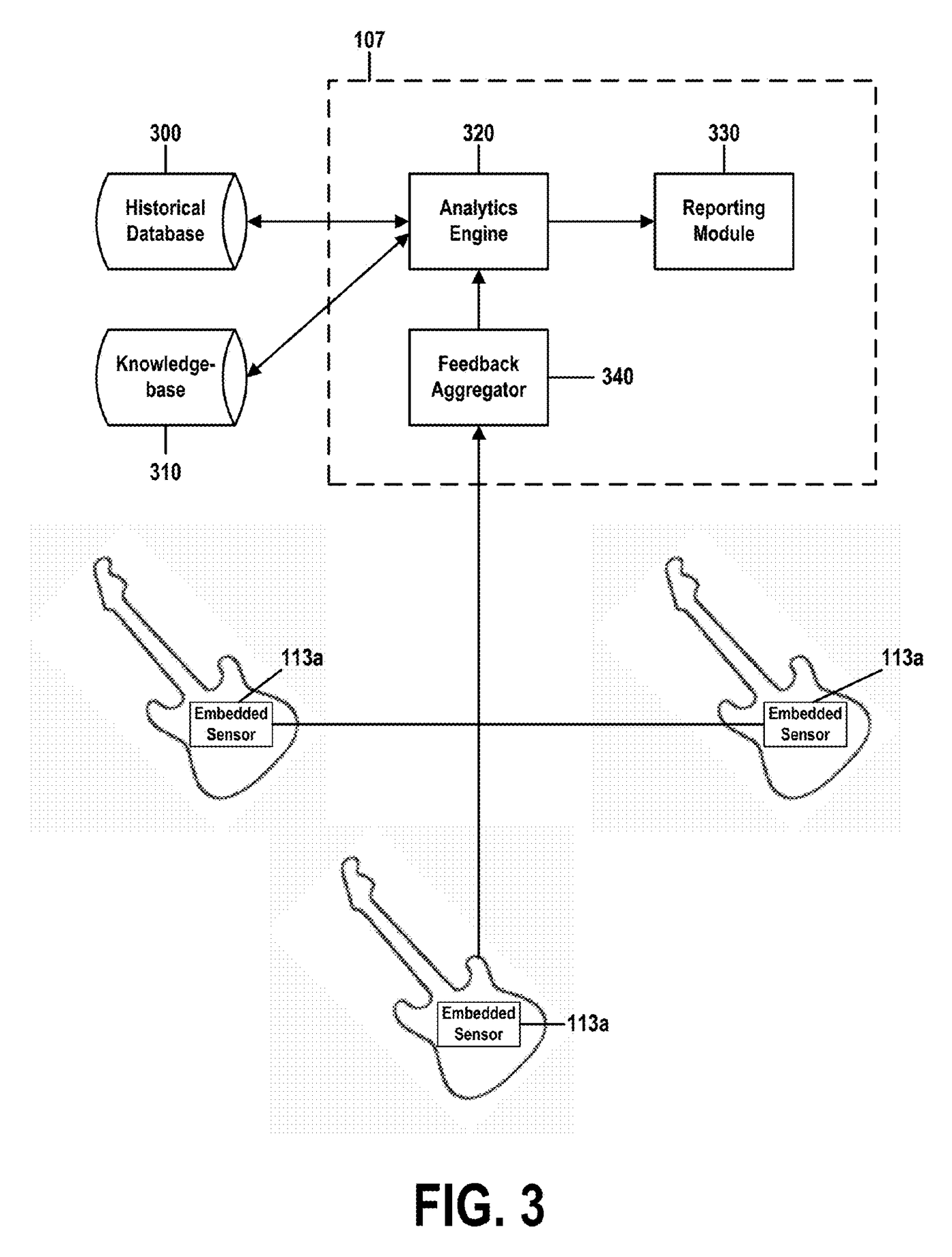
A feedback aggregator that receives everything, tags each element by source and type, sorts it into per-performer streams, and reformats it for analysis. Reading it now, this is context engineering: the component that decides what the reasoning engine actually sees, in what shape and in what order.
An analytics engine that infers characteristics of the ongoing performance. The claims are precise about what grounds the inference, and this is the sentence that stopped me on re-reading: the procedure is “a function of a repository of archived information about past performances by the one or more performers and of a knowledgebase from which the feedback may be given semantic meaning.” In 2026 terms: inference as a function of episodic memory (what happened in past performances, including which tempos historically correlated with audiences losing interest) and semantic memory (what the domain knows, including the score being performed). We even specified the comparison of live sensor data against the stored score to detect that a guitarist is not playing a few wrong notes but is in the wrong key.
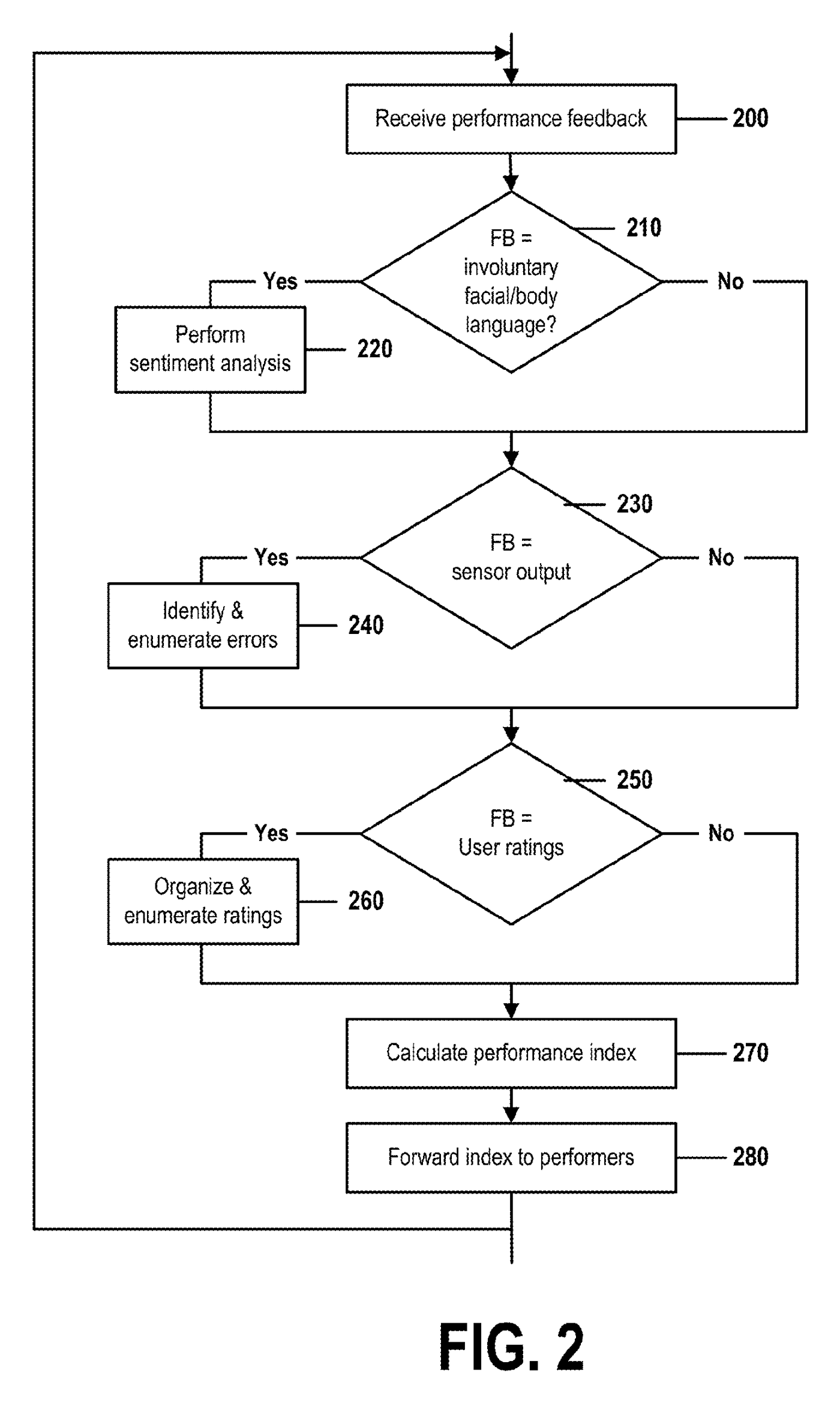
A performance index: a hand-crafted evaluation function that fuses positive tweets, likes, facial sentiment, body-language sentiment and objective accuracy into one number, normalized, thresholded, and tracked over time.
A reporting module that closes the loop to the human: a graph, a named sentiment, a recommendation (“end the bass solo”), or that LED on the guitar neck.
And wrapped around it all, a real-time budget: the spec insists the loop must complete fast enough for the performer to act during the performance, ideally under a second, at worst within a few.
Sensors in, aggregation, memory-grounded inference, evaluation, actuation, iteration. Steps 200 through 280, “performed repeatedly, as an iterative procedure.” It is a sense-think-act loop with memory. In 2016 the taxonomy called this decision support. Today we would call the same diagram an agent, with one deliberate design choice: the actuator is a human.
The mapping, component by component
2016 spec, and its 2026 equivalent:
Embedded sensors, cameras, social ratings: multimodal tool and event ingestion. The insight that involuntary signals (faces, body language) and deliberate signals (ratings) are different classes of evidence, to be fused rather than averaged blindly, is context-quality thinking that many agent pipelines still lack.
Feedback aggregator: the context assembly layer. Tagging by provenance, per-entity streams, format normalization. Today this is the retrieval and packing stage in front of the model, and it is still where most production failures originate.
Historical database plus knowledgebase: episodic plus semantic memory. The patent treats inference as explicitly a function of both. That is the memory-grounded architecture that agentic systems are now converging on, after a detour through stateless prompting.
Performance index: the eval. A linear, hand-weighted, interpretable scoring function with thresholds and persistence conditions. Primitive next to a learned reward model, and also auditable in a way most learned rewards are not. Regulated industries are rediscovering the virtue of that trade-off.
Reporting module with recommendations: actuation with a human in the loop, and an autonomy dial. The spec distinguishes between displaying an index (pure information), naming an inferred state (“the audience is bored”), and recommending a specific action (“increase your volume”). Three escalating levels of agency, with the human always executing. In 2026, choosing the right point on that dial per action class is one of the central design decisions in enterprise agents.
Real-time constraint: the latency budget. The patent’s insistence that feedback must arrive while the performance can still be corrected is the same discipline that separates agents that operate in workflows from agents that write reports about them.
What we got structurally right
Four things hold up, and they hold up because they are data engineering, not model science.
First, the loop is the product. The value was never in any single inference but in the closed cycle of perception, evaluation and correction. Teams that today bolt a model onto a workflow without closing the loop rediscover this the hard way.
Second, inference must be grounded in memory. Our engine without the historical repository and the knowledgebase would have been a sentiment classifier shouting into the void. The same is true of a modern agent without episodic and semantic stores: fluent, and structurally incapable of learning from Tuesday for Wednesday.
Third, evidence has provenance and class. Fusing objective telemetry, inferred sentiment and deliberate ratings as distinct signal families, each with its own reliability profile, is exactly how a serious agent should weigh tool outputs against retrieved documents against user assertions.
Fourth, the human is an architectural component, not an afterthought. The performer is the actuator, and the system’s entire design respects the constraints of that actuator: attention, timing, cognitive load. An LED that turns red is a masterpiece of interface economy under those constraints.
What a decade exposes
Now the humbling part, because the gaps teach more than the hits.
The intelligence was the bottleneck, and we could not admit it. Our “artificially intelligent analytics procedure” was rules, ontologies and classifiers. Fusing frowning faces, sarcastic tweets and MIDI streams into a judgment like “the audience is losing interest because the tempo dropped” was, in 2016, mostly aspiration. The loop was right and the reasoner was weak. Foundation models inverted that: today the reasoner is strong and it is everything around it, the loop, the memory, the context, that is weak in most deployments. The lesson cuts both ways: architecture without intelligence stalls, intelligence without architecture flails.
Memory was append-only, and forgetting did not exist. Our historical database only grew. Nothing decayed, nothing expired, nothing could be provably deleted. In 2016 that seemed like a feature. Today, an agent memory without designed forgetting is a liability with excellent recall: stale facts poisoning decisions, and personal data accumulating without lifecycle. Retention, decay and provable erasure are architectural capabilities, not cleanup scripts.
Permissions were nowhere. Re-read with 2026 eyes, the most striking absence in the entire document: we cheerfully specified cameras performing sentiment analysis on the faces of individual audience members, with zoom lenses to select specific people, and continuous per-member sentiment streams, and there is not one paragraph about consent, entitlement or access. We filed in November 2016; the GDPR became applicable eighteen months later [2] and would have had strong opinions about every figure in that patent. Today I spend a large part of my working life on exactly this layer: what an AI system is allowed to observe, retain and act upon, on whose behalf, enforced in the data layer itself. The 2016 blind spot is the 2026 discipline.
Nothing learned. The system inferred and recommended, but no outcome ever updated the system itself. The weights, in every sense, were frozen. The gap between memory as accumulation and learning as improvement is still one of the honest open problems in agentic AI, and pretending retrieval alone closes it repeats our 2016 optimism in new vocabulary.
The lesson for agent builders
Here is what I take from my own decade-old document.
The agentic pattern is not new. Perception, aggregation, memory-grounded inference, evaluation, bounded actuation: engineers have been drawing this loop for a long time, in decision support, in control systems, in monitoring. What changed in the last three years is that the reasoning component finally works. That is a genuine revolution, and it is also precisely one component of seven.
Which means the scarce skill in agentic AI is not novel. It is the data architect’s discipline applied to a new reasoner: design the memory with lifecycle and forgetting, engineer the context with provenance, make the evaluation auditable, put entitlements in the data layer, respect the latency budget, and choose deliberately where the human sits in the loop. Every one of those concerns was visible in 2016, at least in embryo, to four engineers thinking about rock concerts. Every one of them is where production agents succeed or fail in 2026.
We did not lack the idea. We lacked the model. Now the industry has the model, and what it lacks, deployment after deployment, is the discipline around it. The LED on the guitar neck still seems to me the right ambition for the whole field: a system that knows enough, remembers enough, and is allowed to know enough, to tell you one true and timely thing, while there is still time to act on it.
References
[1] S. D’Alo’, M. Lerro, M. Noioso and N. Piazza, Real-time analysis of a musical performance using analytics (2018), US Patent Application US 2018/0137425 A1
[2] European Parliament and Council of the European Union, Regulation (EU) 2016/679 (General Data Protection Regulation) (2016), Official Journal of the European Union