
Machine Learning

Welcome to the Machine Learning Hub, your one-stop destination for all things related to machine learning!

Get ready to embark on an exciting journey into the realm of AI and discover how machines can learn and make intelligent decisions. Our blog articles are crafted with simplicity and clarity in mind, making complex machine learning concepts easy to understand for everyone. Whether you’re a beginner or an experienced practitioner, we’ve got you covered with informative and insightful content. Explore the fascinating world of algorithms, models, and data as we delve into supervised and unsupervised learning, reinforcement learning, and more. Discover practical applications in various domains like healthcare, finance, and autonomous vehicles.  From introductory guides to advanced techniques, we’re here to help you demystify machine learning and unlock its potential. Join us on this journey as we unravel the secrets of machine learning and empower you to build intelligent systems that can analyze data, make predictions, and drive innovation.

Let’s shape the future together with the power of machine learning!

gemini 4 argon blog header 2784x1566.width 1300

Gemini 4 Argon is now available for everyone

Speeding up robotics development By bringing together advanced visual-semantic reasoning, deep physical understanding, and autonomous code generation, Argon unlocks new workflows across the robotics stack and accelerates progress toward physical AGI. This leap in capability is reflected in Argon’s performance on the Embodied Reasoning (ERQA) benchmark, which tests a model’s ability to understand and solve …
Gemini 4 Argon is now available for everyone Read More »

kdn chugani agentic rag naive rag retrieval system feature

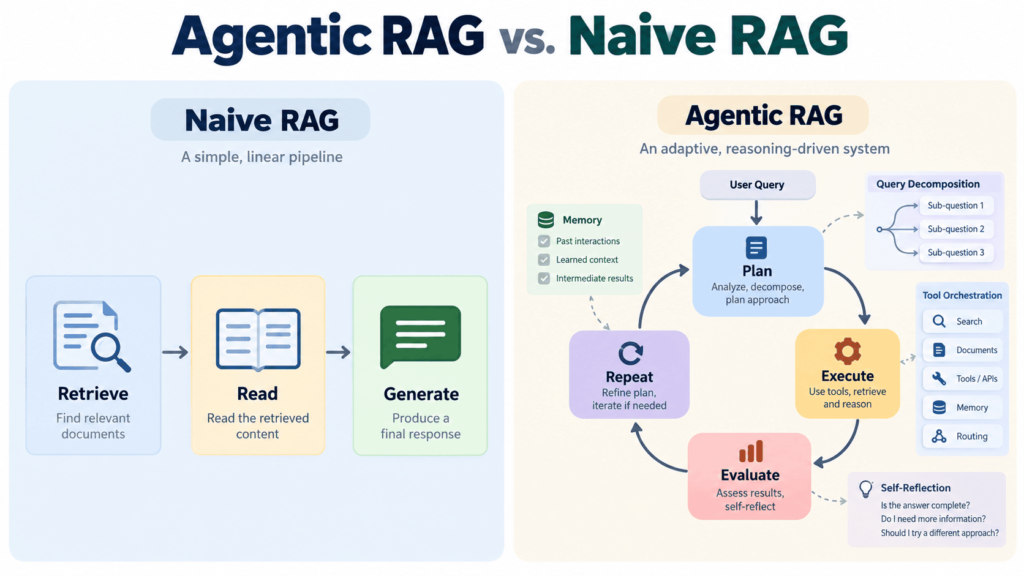
Agentic RAG vs. Naive RAG: When Your Retrieval System Should Think for Itself

Large language models are remarkable text generators, but they have a well-documented weakness: they hallucinate. Without access to verified, up-to-date information, they confidently produce plausible-sounding answers that are factually wrong. Retrieval-Augmented Generation (RAG) emerged as the standard solution, grounding model outputs in external knowledge sources and dramatically reducing hallucinations across enterprise applications. But as organizations …

Agentic RAG vs. Naive RAG: When Your Retrieval System Should Think for Itself Read More »

gemini 4 argon key art 4 lockup light 16 9.width 1300

Developing Gemini 4 Argon responsibly and safely

Gemini 4 Argon is a step forward in what models can do — especially when it comes to deep work in complex, real-world tasks across domains including coding, finance, legal, cybersecurity, and science. Its cyberdefense capabilities are frontier-level and designed to give defenders an advantage over attackers. To maximize its potential, we first wanted cyber …

Developing Gemini 4 Argon responsibly and safely Read More »

1791765458235 u9f878.webp

Jev Your Engines: Seven Open Decision Models vs. a Generative LLM

Previous article: When All You Have Are Decoders, Every Decision Looks Like Generation TLDR Jev-style models let agents decide without generating answers. For bounded choices such as routing or tool selection, they score the available options and return a typed decision, giving agents a direct alternative to generating and parsing an answer token by token. …

Jev Your Engines: Seven Open Decision Models vs. a Generative LLM Read More »

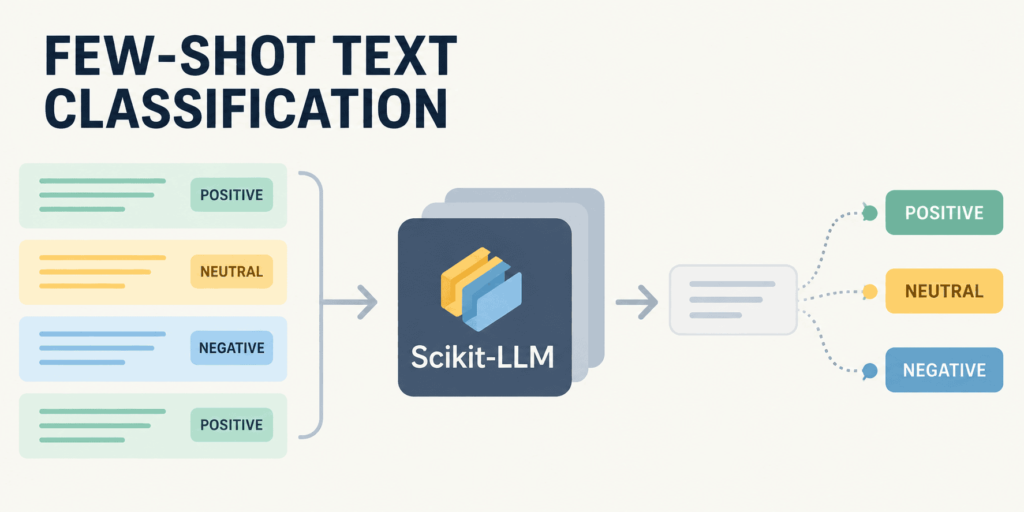
kdn few shot text classification with scikit llm feature

Few-Shot Text Classification with Scikit-LLM

Introduction If you have worked with building text classification models, chances are you got familiar with the usual drill: collecting hundreds to thousands of labeled examples, cleaning the raw text, converting it to suitable numerical representations for machine learning models — like embeddings or TF-IDF — and training your model, such as a logistic regression …

Few-Shot Text Classification with Scikit-LLM Read More »

argon robotics hero.2e16d0ba.fill 1200x600

Gemini 4 Argon for Robotics

Gemini 4 Argon marks a step change in physical understanding, code generation, and visual-semantic reasoning—unlocking new workflows across the robotics stack and accelerating progress toward physical AGI. You can see this leap in capability on the Embodied Reasoning (ERQA) benchmark, which tests a model’s ability to understand and solve physical, spatial problems in 3D environments. …

Gemini 4 Argon for Robotics Read More »

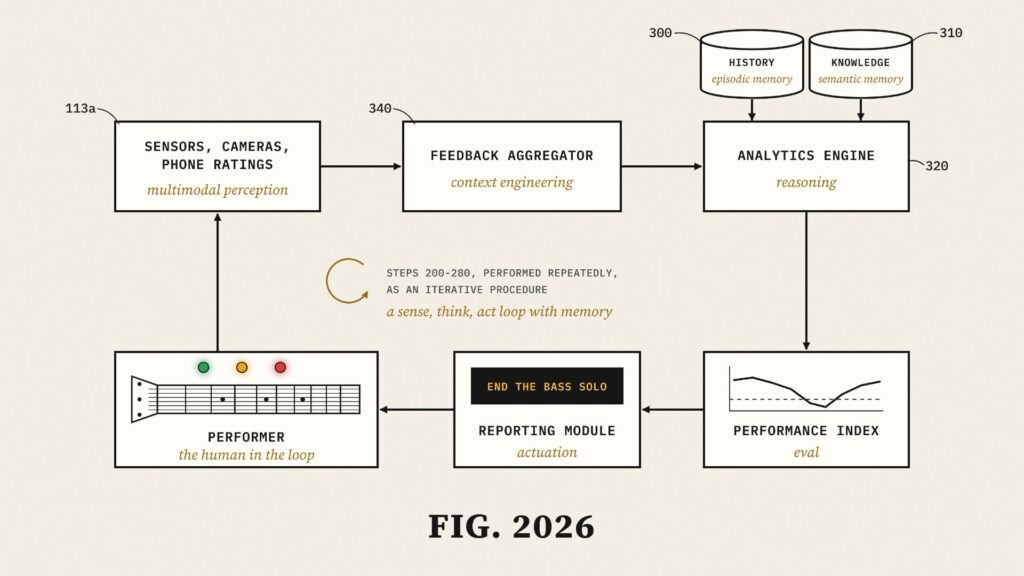
1791558089914 si4njb

We Specified an AI Agent in 2016. We Called It Analytics.

In November 2016, three colleagues and I at IBM filed a patent application with a title that sounds almost quaint today: “Real-Time Analysis of a Musical Performance Using Analytics” (published as US 2018/0137425 A1 [1]). The scenario we described was a rock concert. A guitarist plays an instrument with an embedded sensor, cameras read the …

We Specified an AI Agent in 2016. We Called It Analytics. Read More »

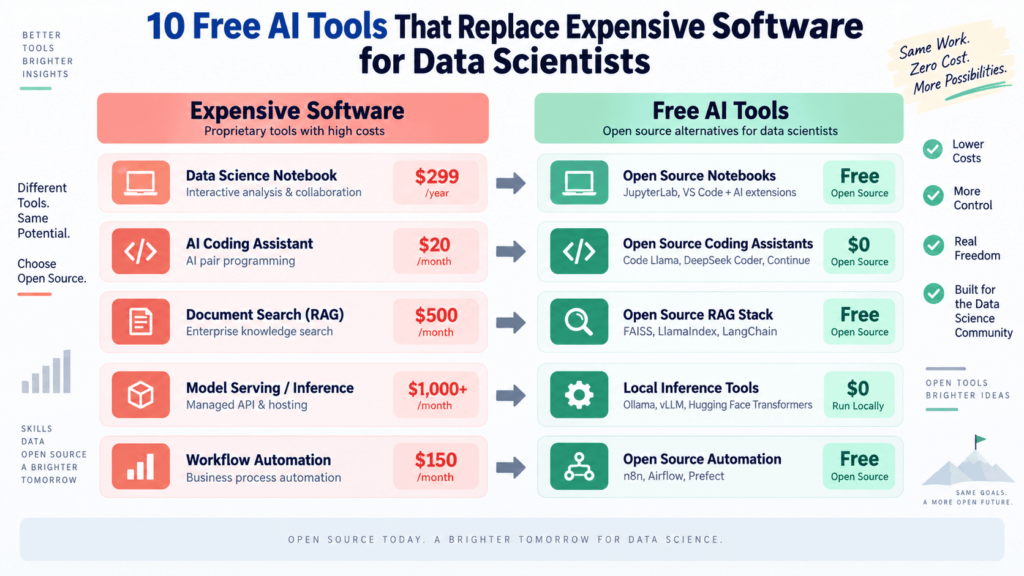
kdn chugani 10 free ai tools replace expensive software data scientists feature

10 Free AI Tools That Replace Expensive Software for Data Scientists

Enterprise data science stacks are expensive. A single DataRobot seat can run over $50,000 a year. Tableau Creator costs around $900 per user annually. Commercial large language model (LLM) APIs charge per token, so a team running continuous data extraction or summarization pipelines can rack up thousands of dollars in monthly inference fees with no …

10 Free AI Tools That Replace Expensive Software for Data Scientists Read More »

1791213082958 lz0owc

How Can AI Agents Read Untrusted Sources Safely?

AI adoption’s main villain is safety. We’ve been seeing incidents of data exfiltration and confused deputy attacks. It happens because an LLM is probably the weakest link in the system. Most attacks happen when AI agents are exposed to the lethal trifecta. If agents can read from untrusted sources, access internal knowledge, and communicate to …

How Can AI Agents Read Untrusted Sources Safely? Read More »

Scroll to Top